


On a humid summer afternoon, condo living can amplify every little sound. Footsteps from the kitchen, a chair sliding back from the table, even a dog trotting down the hall can seem louder when rooms are stacked close together and hard surfaces carry noise farther than people expect.
That is why laminate selection in a condo is not just about color or plank width. It is also about how the floor feels underfoot, how it handles Lowcountry moisture, and how much sound control you can realistically build into the system from the start.
Thickness changes the feel more than the volume
One of the most common misunderstandings we hear is that thicker laminate automatically makes a room much quieter. In practice, thickness matters, but mostly because it changes how solid the floor feels and how well it bridges minor subfloor imperfections. A thicker board often reduces the hollow or clicky sensation people notice with thinner products, which can make the whole room seem calmer.
That said, noise control is rarely solved by plank thickness alone. The bigger improvement usually comes from pairing a well-made product with the right cushion underneath. If you are comparing visuals and construction details, our laminate options can help you see how style and performance come together rather than treating quiet as a one-number decision.
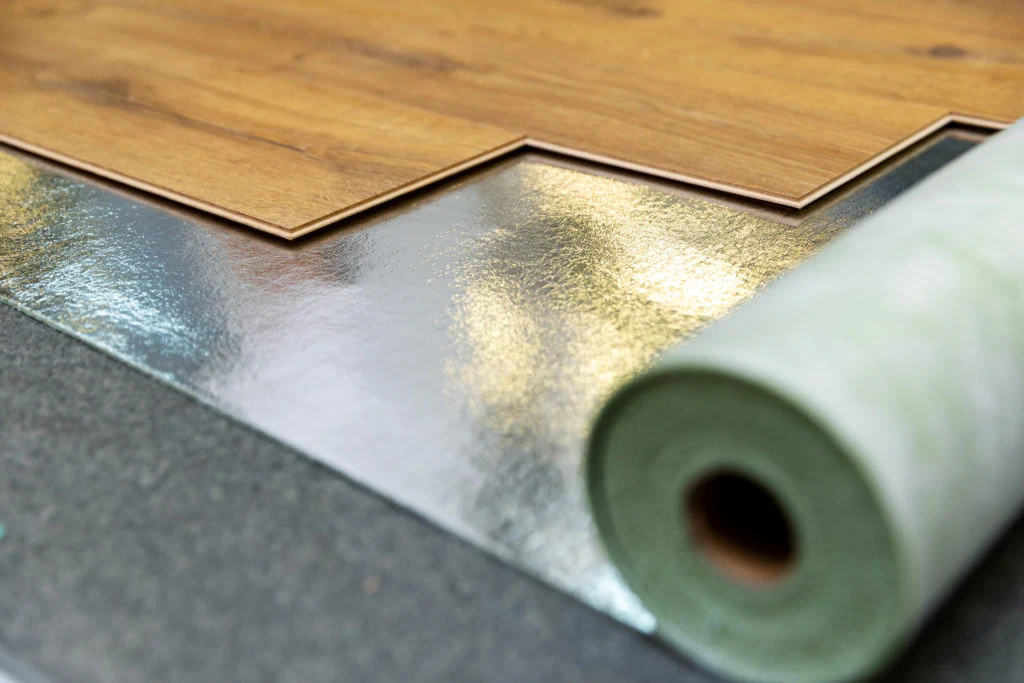
Underlayment is where sound control really happens
If your goal is a quieter condo, underlayment deserves at least as much attention as the floor covering itself. A quality pad can soften footfall, reduce the sharpness of sound transmission, and help the surface feel more comfortable during everyday use. It also helps smooth out small irregularities in the substrate, which supports better long-term performance.
In a place like Charleston, that layer has another job: managing the effects of humidity that often sits above 80 percent for long stretches of the year. That is one reason we often guide condo owners toward waterproof laminate styles when the home is near marsh air, wind-driven rain, or simply dealing with everyday moisture from entryways and kitchens. Quiet matters, but stability matters too.
Condo rules and subfloor conditions shape the right answer
Before anyone chooses a product, it is smart to check the condo association requirements. Some buildings specify minimum sound ratings for floor assemblies, while others restrict the type of underlayment you can use. Skipping that step can turn a good flooring choice into a frustrating redo.
Subfloor type matters just as much. A concrete slab in a Mount Pleasant condo behaves differently from a wood-framed upper level, and each one affects sound in its own way. Concrete can feel firm and echo-prone without the right pad, while framed construction may transmit impact noise more easily to the unit below. This is where professional installation becomes more than a convenience. Proper prep, correct expansion space, and an underlayment suited to the building all help the finished floor sound and perform the way you expected.
Style still matters, especially in smaller spaces
Once the performance pieces are handled, then it makes sense to focus on appearance. In many condos, lighter visuals can help rooms feel more open, while texture can disguise everyday dust and tracked-in grit. That can be especially helpful for barrier-island homeowners on Isle of Palms, where sand has a way of coming inside no matter how careful you are.
We often recommend starting with performance needs, then narrowing the look from there. If you want to compare grain patterns and surface character, our textured laminate selections are a useful place to begin because they show how practical finishes can still feel warm and refined. At Palmetto Carpet & Floor Coverings, we have been helping Lowcountry homeowners make these tradeoffs since 1990, and the best results usually come from balancing acoustics, moisture resistance, and style instead of chasing just one feature.
A quieter condo floor is usually the result of smart layers working together, not one magic specification. If you want help sorting through thickness, pad choices, and building requirements, you can request an appointment and we will walk you through the options that fit your home.


