


Commercial Flooring & Installation in Mount Pleasant & Charleston, SC
Commercial floors work harder than any floor in a home. They take rolling chairs, delivery carts, spike heels, sand tracked in off the beach, and a cleaning crew every night, and they still have to look presentable to your customers on day one thousand. Getting that right starts with a material built for the traffic and ends with an installation that holds up, and that is the work our crews have done for Lowcountry businesses since 1990.
You do not have to sort it out alone. From offices and medical suites to retail floors, restaurants, houses of worship, gyms, and resort rentals out on the islands, we help you weigh durability, budget, downtime, and looks, then install the floor on a schedule that keeps your doors open. Commercial work sits alongside the rest of our flooring services, so one local team measures, supplies, and installs the whole job. Tell us about your space and request an appointment for an on-site measure and a written quote.
When You Need a Commercial Flooring Contractor
Bring in a commercial flooring contractor any time the floor serves the public or a working staff, because a business floor answers to different rules than a bedroom. Commercial-grade products are built and rated for heavier wear, and they are usually installed with methods a homeowner never thinks about: full-spread adhesives instead of a floating click, moisture testing on concrete slabs before anything goes down, and transitions and wall base that stand up to mops and carts.
The stakes are higher, too. A floor that fails in a store or clinic means closed aisles, lost hours, and a second installation you already paid to avoid. Residential-grade flooring in a commercial setting is the classic false economy, and it is also where manufacturer warranties quietly stop applying. Public spaces carry rules a home never does, from slip resistance at entries to smooth, even transitions that keep walkers and carts moving safely, and the right contractor builds those into the plan. Choosing the right product for the room, and having it installed to the maker's commercial spec, is what protects both the floor and the coverage behind it.
Questions?
We're here to help
Types of Commercial Flooring We Install
Four materials cover the large majority of commercial jobs, and the right one depends on the traffic, the moisture, the cleaning routine, and the look you are after. Here is how each earns its place, and where you can browse the commercial-rated lines we carry.
Commercial Carpet and Carpet Tile
Carpet is the quiet workhorse of offices, and it is not only about looks. It absorbs sound in open floor plans and conference rooms, softens a space, and hides a surprising amount of daily wear. Modular carpet tile adds one more advantage that matters in a business: when a section gets stained or worn, you replace those squares instead of the whole floor. Our commercial carpet and carpet tile runs from dense level-loop for corridors to patterned tiles for a front office.
Commercial Luxury Vinyl (LVT and LVP)
Luxury vinyl has become the default for spaces that want a wood or stone look without the upkeep. The wear layer on a commercial-rated plank or tile is thicker than a residential one, which is what lets it shrug off chair casters, foot traffic, and rolling equipment. It is waterproof, it cleans with a damp mop, and glued down over a prepped slab it stays flat under heavy use. Browse the commercial luxury vinyl we stock for retail, restaurants, and busy office floors.
Porcelain and Ceramic Tile
When you need the hardest, most water- and stain-resistant surface in the building, tile is the answer. Fired porcelain and ceramic resist scratches and heat, handle standing water, and can last for decades with almost no babying, which is why you see them in lobbies, entryways, restrooms, and restaurant kitchens. The trade-off is a longer, more skilled installation, and that is exactly the kind of work our tile setters do every week. Look through our commercial porcelain and ceramic tile for the finishes that fit your space.
Sheet Vinyl and Resilient Flooring
Sheet vinyl solves a problem the other materials cannot: it goes down in wide, nearly seamless runs, so there are very few places for water or bacteria to hide. That makes it a mainstay in healthcare rooms, back-of-house kitchens, and any space that gets hosed, wiped, or sanitized constantly. Our sheet vinyl and resilient options give you a sanitary, budget-friendly surface where cleanliness matters more than showroom looks.
Matching the Floor to Your Space
The best commercial floor is the one that fits how the room is actually used, so we start with your space, not a catalog. An office wants quiet and a professional look; a restaurant wants a surface that survives grease, spills, and a mop at midnight; a clinic wants seamless and sanitary; a boutique wants a floor that flatters the merchandise.
Around Charleston that plays out in real ways. Mount Pleasant's growing office parks and medical suites lean on carpet tile and glued-down luxury vinyl. Downtown restaurants and shops need floors that handle tourist-season traffic and humidity without complaint. Churches and fitness studios want durable, comfortable surfaces for big crowds. And the vacation rentals on Isle of Palms and Sullivan's Island take beach sand and back-to-back guests all season, so they need something tough that still photographs well. Coastal humidity and slab-on-grade construction shape the choice as much as the traffic does, since a floor that traps moisture will not last no matter how tough the surface looks, which is exactly why the subfloor gets tested before anything is ordered. If durability is your first question, our guide to the best flooring for high-traffic areas is a good place to start.
How We Handle Commercial Flooring Installation
A commercial installation lives or dies on preparation and scheduling, not just the product. Our process is built to protect both your floor and your operating hours, and it is the reason businesses call us a contractor rather than only a store.
- On-site assessment and measure. We visit the space, measure it accurately, check the subfloor, and talk through how the room gets used and cleaned before recommending anything.
- Material selection with a project specialist. You work with someone who knows the commercial lines, so the product is matched to the traffic, the wear rating, and your budget from the start.
- Subfloor prep and moisture testing. Concrete slabs get tested for moisture and leveled as needed, because most commercial floor failures trace back to a subfloor that was rushed.
- Scheduling around your business. We plan the work in phases and after hours where it makes sense, so your floors get replaced without shutting you down for a week.
- Job supervision and coordination. On larger commercial jobs, one point of contact keeps the crews, the materials, and the flooring schedule aligned with the other trades on a build-out.
- Professional install and a final walk-through. Trained installers set the floor to the manufacturer's commercial spec, then we walk it with you so the job is not done until you are satisfied.
That full-service approach is spelled out on our flooring installation page, and it applies to a single suite or a whole building the same way.
What Drives the Cost of Commercial Flooring
Commercial flooring is priced by the job, not by a sticker, because a dozen things move the number. Understanding them helps you plan a realistic budget before you ever see a quote.
- Square footage and material grade. Total area sets the baseline, and a higher wear rating or a designer line costs more than a builder-grade product.
- Subfloor condition and prep. Leveling, moisture mitigation, and removing an old floor all add labor before the new surface goes down.
- Installation method. A full-spread glue-down or a tile-set floor takes more time and skill than a floating install, and that shows up in the price.
- Scheduling and access. After-hours, weekend, or phased work to keep you open costs more than an empty-building install, but it saves you the bigger cost of closing.
- Transitions, base, and trim. Wall base, thresholds, and transitions between materials finish the job and add to the material list.
The honest way to price a commercial floor is an on-site measure of your actual space and subfloor, which is why we quote every job in person rather than over the phone. If you would rather spread the investment out, we also offer project financing to keep your cash free for the rest of the business.
Why Charleston-Area Businesses Choose Palmetto
We are a family-owned flooring company that has served both homeowners and businesses since 1990, so a commercial floor here is handled by people who have installed thousands of them, not a call center. You get a real showroom in Mount Pleasant where you can see and feel commercial lines from names like Mohawk, Shaw, Aladdin Commercial, and EF Contract, and a project specialist who stays with your job from measure to walk-through.
That local, hands-on approach is what customers tend to mention, from low-pressure showroom help to installers who show up on time and clean up after themselves. You can read what businesses and homeowners across the area say in our customer reviews.
Commercial Flooring Across the Lowcountry
From our Mount Pleasant showroom we handle commercial flooring for businesses in Mount Pleasant, Charleston, Isle of Palms, Sullivan's Island, Goose Creek, Hanahan, Awendaw, and Summerville. If your building sits anywhere around the Charleston area and you are weighing new floors, we are close enough to measure it in person and stand behind the work afterward.
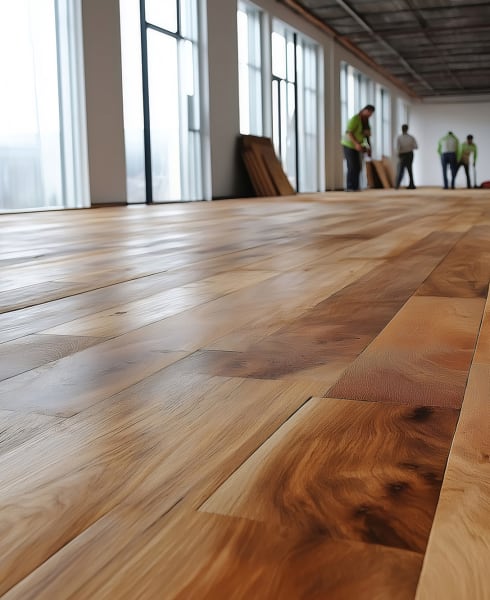
Get Your Commercial Flooring Project Started
Whether you are refreshing one office or flooring an entire building, the first step is the same: a conversation about how your space is used and an accurate on-site measure. Request an appointment with one of our project specialists, and we will help you choose a commercial floor built to last and get it installed on a schedule that works for your business.
Request an appointmentCommercial Flooring FAQs
We install commercial carpet and carpet tile, luxury vinyl plank and tile, porcelain and ceramic tile, and sheet vinyl. Which one fits depends on the traffic, moisture, and cleaning your space sees, and we help you match the material to the room during your estimate.
Yes. On bigger commercial projects we provide job supervision and coordination, so one point of contact keeps the flooring phase, the materials, and the crews aligned with the rest of the schedule. That keeps the floor from becoming the thing that stalls your opening.
We can. Commercial jobs are often phased or scheduled after hours and on weekends so your business keeps running while the floor gets replaced. We plan that timeline with you up front so there are no surprises.
For the heaviest traffic, porcelain tile and glued-down commercial luxury vinyl are the toughest surfaces, while commercial carpet tile wins where you want to cut noise and swap out worn sections. The best pick balances that durability against comfort, looks, and budget for your specific space.
It depends on the size of the space, the material, and how much subfloor prep is needed, so timelines range from a day for a small suite to a phased schedule for a full building. After we measure and check the subfloor, we give you a realistic start and finish date.
If you are in Mount Pleasant, Charleston, Summerville, Goose Creek, Hanahan, Awendaw, or out on Isle of Palms and Sullivan's Island, yes. We are a local Lowcountry company, so we measure your space in person and are here for warranty and service after the job is done.


