


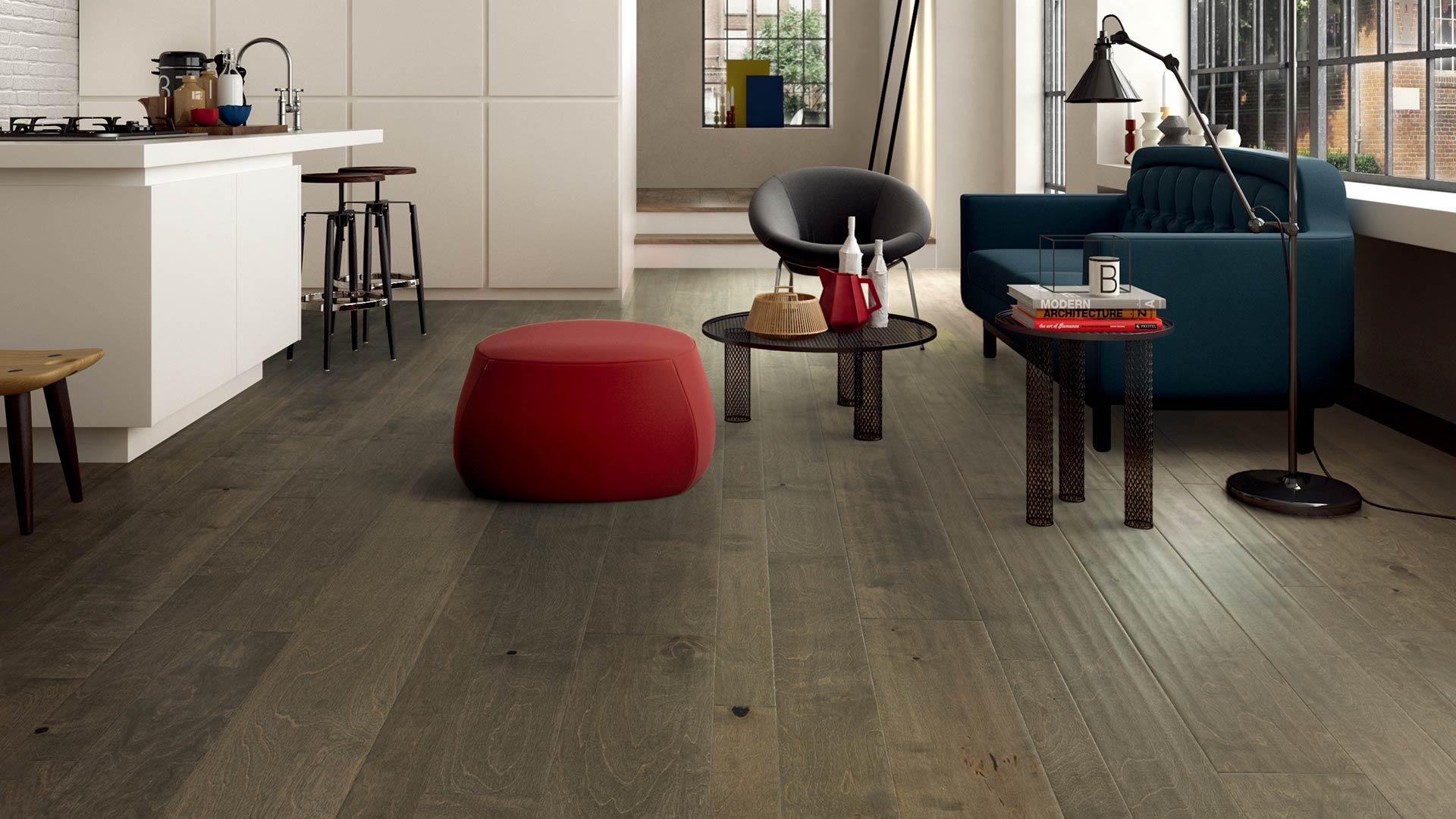
You love the idea of real wood underfoot in your beach place—the soft creak of planks, the way sunlight bounces off a low-sheen finish, the warmth on bare feet after a walk on the sand. But then reality sets in: salt air, humidity, wet towels, and sand that somehow makes it into every room. The question becomes: can hardwood really work in a coastal home, and if so, how do you choose wisely?
Why Beach Homes Are Tough on Hardwood
Barrier island houses live in a constant tug-of-war with moisture. Warm, damp air seeps in around doors and windows, and summer storms push humidity and occasional standing water into entryways and lower levels. Wood is a natural material, so it swells and shrinks as the environment changes.
In this kind of climate, engineered hardwood is usually a safer bet than solid wood. Engineered planks are built with a real wood top layer over a stable core, which helps them resist warping and cupping when humidity spikes. Narrower boards, balanced construction, and professional acclimation before installation all work together to keep movement under control.
If you want to see what that looks like in practice, you can browse the engineered and solid options in our hardwood flooring collection, filtering by species, width, and even water protection level.
Best Hardwood Choices for Coastal Conditions
Once you’ve settled on the right construction, species and finish matter just as much. Some woods and surface treatments are more forgiving when sand and salt are part of daily life.
For most coastal homes, we typically recommend:
- Stable species. Oak and hickory tend to perform better in humidity than softer or more temperamental woods. Their grain also does a nice job of disguising everyday wear.
- Textured finishes. Wire-brushed or low-sheen matte finishes hide fine scratches from sand far better than glossy surfaces, which show every scuff.
- Mid-tone colors. Very dark floors highlight dust and sand; very light planks can show every spill. Natural and medium stains strike a good balance.
If you’re comparing wood to other moisture-ready options for different parts of the house, it can help to contrast your short list with our luxury vinyl selection, especially for ground-level spaces that see more standing water risk during storm season.
Protecting Your Investment from Sand, Salt, and Humidity
The right product is half the battle; how you live with it is the other half. Beach traffic is different from an inland home, and small habits go a long way.
Start with smart floor planning: place sturdy mats at every exterior door, and use runners down high-traffic hallways. Area rugs in living rooms and under dining tables catch grit before it can act like sandpaper on the finish. For bedrooms where you’d rather step onto something soft first thing in the morning, many homeowners pair wood in the main living spaces with a cozy carpet collection in upstairs retreats.
Humidity control is just as important as surface care. Keeping the indoor environment as steady as possible—air conditioning, ceiling fans, and dehumidifiers in particularly damp seasons—helps minimize seasonal gaps and cupping. Quick wipe-ups after wet swimsuits or pet bowls spill will protect the edges and seams of your planks over the long term.
Why Professional Installation Matters Even More at the Coast
In a coastal setting, installation isn’t just about straight lines and tight seams; it’s about understanding how wood behaves in a damp, salt-heavy environment. Subfloor moisture readings, expansion gaps, and the right underlayment all play a big role in how your floors look not just on day one, but ten summers from now.
Our professional flooring installation team is used to working in homes near tidal creeks and the ocean, so we plan for movement, check moisture levels, and walk you through what to expect season to season. If you’d like to explore design ideas before you commit, you can also spend some time in our flooring inspiration galleries to see how different wood tones and plank sizes feel in bright, coastal spaces.
When you’re ready to talk specifics for your own beach home, you can schedule your flooring consultation, and we’ll help you narrow down options that balance beauty, durability, and the realities of Lowcountry coastal living.


