


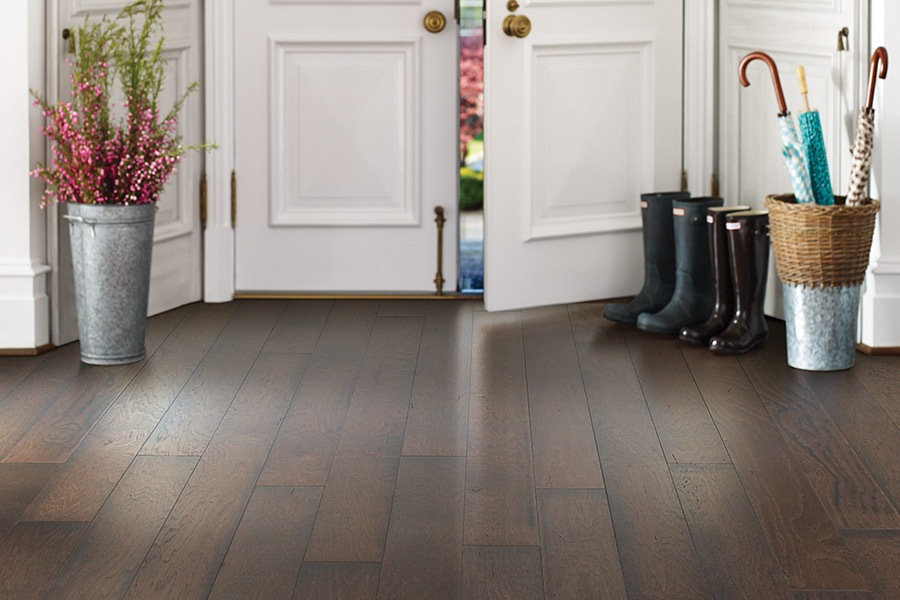
A beach house sounds easy on paper until the first busy summer weekend. Wet feet come in from the porch, sand follows the dogs, and by the end of the day you can feel grit underfoot. In coastal homes near Isle of Palms, that daily abrasion matters because wood does not fail all at once; it slowly loses its finish where traffic and debris keep working on the surface.
Start by choosing the right wood construction
Protection begins before the first doormat goes down. In the Lowcountry, high humidity, salt air, and big swings between air-conditioned interiors and sticky outdoor weather make stability just as important as appearance. That is why we usually steer beach-home owners toward engineered hardwood options rather than solid planks. A layered build handles moisture changes more predictably, which helps reduce movement that can open seams where grit likes to settle.
Species and texture also affect how visible wear becomes over time. A floor with stronger grain variation often hides the small marks of beach life better than a very uniform surface. Many homeowners like the forgiving look of oak hardwood styles, especially when they want something classic that still masks light scratching better than a smoother, more delicate visual.
Make the finish work for real life
Not every hardwood surface shows sand in the same way. A glossy finish can look beautiful on day one, but it tends to spotlight every scuff, swirl, and tracked-in grain. For houses that stay busy through summer and holiday traffic, a lower-sheen texture is often the smarter call. We often recommend wire-brushed hardwood looks because that subtle texture helps disguise minor wear without making the room feel rustic or heavy.
That does not mean texture makes a floor indestructible. It simply buys you more visual grace between cleanings and refinishing cycles. The goal is not to stop beach sand entirely; it is to keep ordinary use from looking like damage. In older Charleston homes, that balance matters because owners want character, not a surface that seems tired after one season of guests.
Build a routine that catches grit early
The best defense is consistency. Sand acts like fine sandpaper, so the earlier you stop it, the less finish you lose. Entry mats outside and inside each door help, but they only work if they are large enough to catch several steps. Runners in the heaviest travel lanes can also reduce wear, especially between porches, kitchens, and main living areas.
Cleaning habits matter just as much as product choice. Dry debris should be removed before anyone reaches for a damp mop, because rubbing loose grit across the surface creates the scratches you are trying to avoid. A soft broom, microfiber dust mop, or vacuum made for hard surfaces will do more good than occasional deep cleaning. If you want to compare species, finishes, and color variation before settling on a plan, our hardwood flooring inspiration galleries can help you picture what hides everyday beach wear best.
Know when another material makes more sense nearby
Even people who love wood do not need it in every zone. In mud-prone entries, lower-level rooms near marshy ground, or spaces that regularly take wet towels and coolers, a different surface may simply be more practical. Some homeowners pair hardwood in the main living areas with waterproof laminate choices closer to the doors or in casual hangout spaces. That kind of mix can preserve the warmth of wood while reducing worry where moisture and grit are unavoidable.
Since 1990, Palmetto Carpet & Floor Coverings has helped homeowners in Mount Pleasant sort out those real-life tradeoffs instead of chasing showroom perfection. If you want help choosing a surface that can handle beach traffic and still look right for your home, you can request an appointment and we’ll walk through the options with you.


