


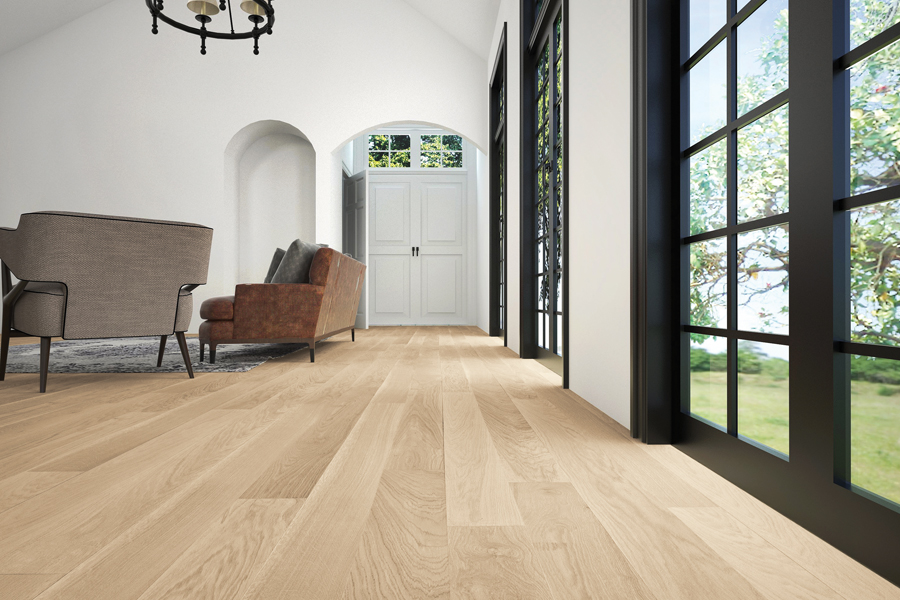
Picture this: you’ve finally found your dream country property under the pines, and now you’re ready to trade builder-grade flooring for real hardwood. You know you want warm wood underfoot, but every time you look at samples, one question keeps coming up—wide plank or narrow strip? In a Lowcountry climate, that choice isn’t just about looks; it also affects how your floors live with humidity, pets, and muddy boots.
Below, we’ll walk through how each width behaves, where it shines, and what makes sense for spacious country homes and marshside retreats.
What Counts as “Wide” or “Narrow” — And Why It Matters
Most hardwood today falls into two broad categories:
- Narrow strip: usually 2¼"–3¼" wide
- Wide plank: typically 5" and wider
Narrow boards create more seams and visual texture, while wide planks show off larger sections of grain. That difference changes how a room feels. Narrow strips give a subtle, traditional look that can make a space feel crisp and detailed. Wide planks read calmer and more open, with fewer lines breaking up the floor.
For country homes with long sightlines and open-concept living, wide planks often emphasize that airy feel. If you’re not sure what appeals to you, browsing our hardwood flooring collection is a quick way to see both looks side by side in oak, hickory, maple, and more.
Design Impact: How Plank Width Changes the Room
Width plays a big role in how your rooms read—especially big family spaces, long hallways, or cozy bedrooms.
In large great rooms, wide planks tend to:
- Make the space feel more continuous and relaxed
- Highlight knots and character in species like hickory or walnut
- Pair well with rustic beams, shiplap, and big windows that look out over marsh or forest
In smaller rooms or older cottages, narrow strips can:
- Add a sense of movement and rhythm underfoot
- Complement traditional trim and millwork
- Help disguise small gaps or seasonal changes because there are more seams
Direction matters too. Running boards along the longest wall usually makes a room feel larger, whether you choose wide or narrow. If you’re juggling flooring for multiple rooms at once, our flooring inspiration galleries can help you visualize how different widths play with light, paint color, and furniture.
Humidity, Gaps, and Stability in the Lowcountry
In our hot, humid climate, every hardwood floor will expand and contract through the seasons. Plank width just changes how you see it.
Because each wide board spans more surface area, any movement can show up as slightly more noticeable gaps or cupping if the product or installation isn’t right. That’s why we often recommend engineered hardwood for country homes near marshes and tidal creeks. Its layered construction makes it more dimensionally stable than solid wood, especially in wider widths.
On the flip side, narrow strips give the wood more joints to “flex” at, so seasonal changes are spread out across many seams. That can be reassuring in rooms with big temperature swings, like sunrooms or bonus spaces over garages.
The good news: with the right product and a proper install, both widths can perform well here. Our professional flooring installation team focuses on moisture testing, acclimation, and expansion gaps—details that matter a lot more in the Lowcountry than they might in a drier climate.
Lifestyle, Cleaning, and Long-Term Resale
Once the novelty wears off, you’ll live with your floor every day—mud from the driveway, sand from weekend beach trips, and the occasional dog mishap.
Wide planks are easier to clean quickly because there are fewer seams for dust and grit to settle into. They also showcase the natural character of the wood, which suits relaxed country interiors with big farm tables, stone fireplaces, and leather sofas.
Narrow strips can be more forgiving visually. Their busier pattern often hides small dents and scratches better, which can be helpful in high-traffic hallways or stair landings. If you’re restoring an older home in Charleston or tying into existing wood, narrow boards also tend to look more period-appropriate.
From a resale perspective, both widths are accepted and attractive; the key is that the choice fits the architecture. Wide planks feel current in open layouts and new builds, while narrow strips complement traditional trim and smaller, compartmentalized floor plans. If you’re mixing hardwood with other materials, you can also look at our tile catalog or carpet collection for adjoining rooms like baths and bedrooms.
Bringing It All Together for Your Home
Choosing between wide and narrow isn’t about one being “better”—it’s about matching style, structure, and climate to the way you live. Room size, natural light, existing trim, and how hard your family is on floors all play a part. Seeing full-size boards in person makes that decision much easier, which is why we keep so many options on hand at our Mount Pleasant showroom.
When you’re ready to compare samples and talk through widths, species, and installation details for your own country home, schedule your flooring consultation and we’ll walk you through it step by step.


